



From reactive to proactive: the API partner experience at iFood
- Year
- 2025
- Duration
- 3 weeks
- Tools
- Figma, interviews, and AI
- Context
- API partners · catalog and order
- Industry
- Marketplace · Retail
- My role
- Diagnosis and solution vision
Summary
Grocery chains, wholesalers, and pharmacies reach iFood through API integration. Catalog and order operations sit at the core of that relationship — and their quality decides whether orders arrive complete, without substitutions, and on time.
Over three weeks, I led the diagnosis and solution vision: research with stakeholders, partners, and integrators; an audit of the live operation; and prototypes of the strongest hypotheses for squad prioritization.
The problem
Symptom
Grocery and pharmacy retail grew fast inside the marketplace. With growth came more complex partner operations — and integration issues started hitting quality KPIs: complete orders, no substitutions, on time.
Evidence
- Problems at large chains skipped support and reached leadership as an SOS — with no traceability.
- More partners went offline under temporary quality sanctions.
- Little instrumentation for proactive monitoring; limited visibility into their own integrations.
- Integrated partners accounted for roughly a third of the vertical's GMV — a direct financial hit.
Method
I used AI to speed up steps that used to demand technical rigor — and kept "human in the loop" where it matters: cross-checking information and deciding. Automation bought speed; human judgment stayed central.
The real challenge isn't generating output. It's orchestrating the decision chain: which criteria we use, and which tradeoffs we accept.
Principles
Visibility
Partners only acted once the problem was already late. Without visibility at the hottest moment of the operation, autonomy is impossible.
Autonomy
Autonomy is intelligence to decide better. Precise partner resolution improves both the partner and the consumer experience.
Standardization
Actions tuned to each partner's maturity save internal resources and raise integration quality over time.
The vision
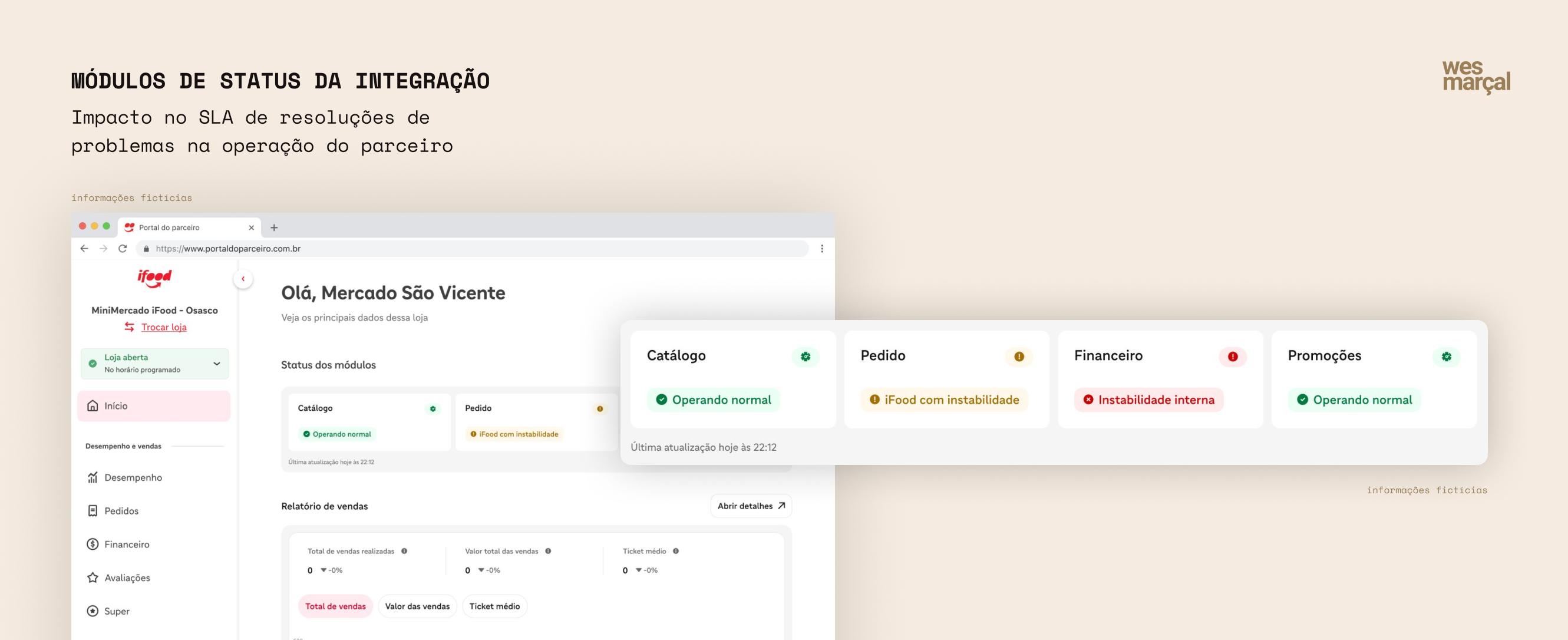
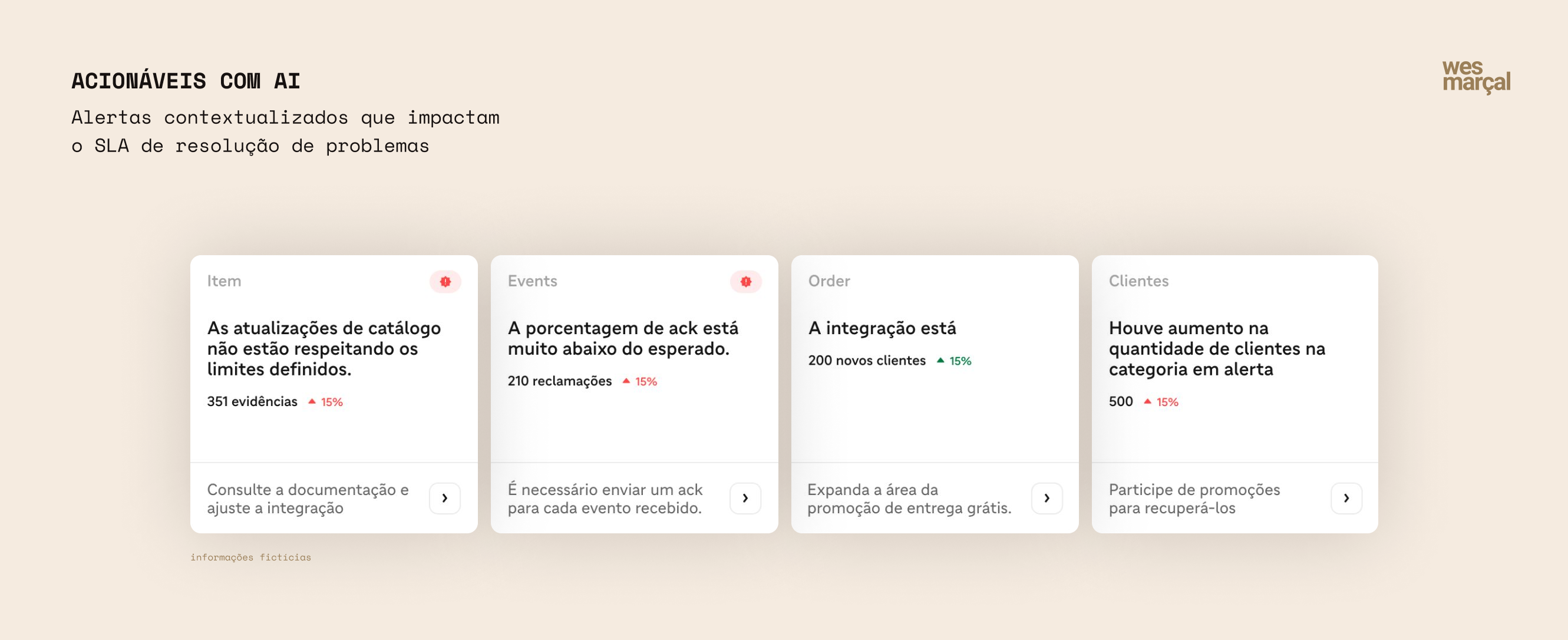
Give partners and integrators the information and tools to spot and fix integration problems on their own.
Clear dashboards and directed actions on integration health.
Experience adapted for both the partner and the integrator.
Modules focused on the moments that matter most day to day.
Retrospective
What I learned
The qualitative sample was the weak point
Validating hypotheses with partners is hard: people running integrations prioritize today's fire. Still, I spoke with 4 companies — and they surfaced what earlier research missed: partners teaching themselves workarounds for gaps in the integration tooling.